RBA Recap
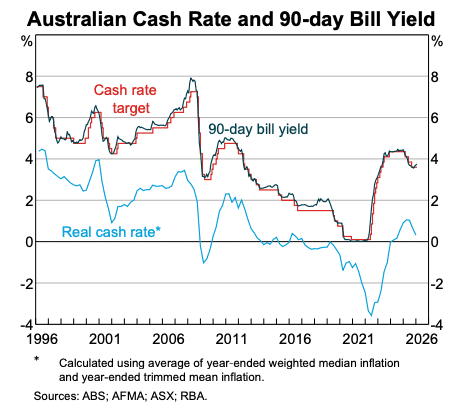
- The RBA has abruptly switched gears – a 25bp hike to 3.85% in February marks a rare, fast pivot from easing back to tightening, signalling the “easy disinflation” phase is over and the inflation fight isn’t finished.
- This wasn’t one bad print, it was breadth and persistence. Inflation is still sitting around the mid-3s on both headline and underlying measures, and pressures have spread across housing, goods and (most importantly) sticky market services, raising the risk inflation above target becomes normalised.
- The real story is demand outrunning a constrained economy. Private demand (housing in particular) has rebounded faster than the Bank expected, while weak productivity and a still-tight labour market mean Australia’s “speed limit” is lower leaving the RBA with one lever: restrain demand to protect credibility.
The Australian Economy
- Stronger household spending, housing finance and investment momentum narrowed the margin for error, leaving the RBA increasingly focused on upside inflation risks as February looms.
- Nothing screamed crisis on its own, but the cumulative run of data steadily closed off the option to wait. Inflation wasn’t cooling convincingly, demand wasn’t moderating as forecast, and the economy looked closer to capacity than the RBA expected.
- Inflation shifted from “progress” to “persistence”. Core inflation re-accelerated and the make-up got worse: services inflation at 4.1% and households still expecting roughly 4.6% inflation, signalling domestically driven, sticky pressure rather than a fading shock
- Housing, jobs and spending all said financial conditions weren’t restrictive enough. Dwelling prices re-accelerated, employment snapped back hard, and consumption strength was concentrated in discretionary services where inflation is hardest to dislodge Business surveys showed capacity utilisation still high, implying limited slack and an elevated risk of demand translating into prices, not output.
Please click here to download the Curve Insights
